
Who would have thought that honeybees love the caffeine in coffee just as much as we do? Bees, and other pollinators, are extremely important to the coffee world. (It makes sense, but who’s thought much about it?)
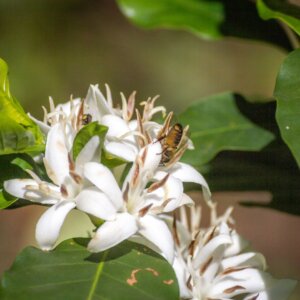
Honeybees Pollinating Coffee Flowers
The coffee bean we know and love is the seed of the coffee cherry. (The coffee cherry is the fruit that grows on the coffee plant.) Like all fruits, it starts life as a coffee flower. This flower must then be pollinated to produce a fruit and seed. These coffee flowers contain low doses of caffeine in their nectar and pollen, which attracts the bees.
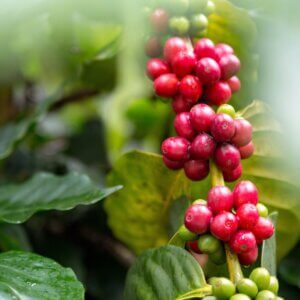
Coffee Cherries
That’s right, bees love caffeine! Caffeine repels most insects and can be toxic to them in large doses, but the small amounts in the coffee flowers actually improves the bees’ memory. The caffeine from the coffee flowers also protects the bees from some viruses and funguses.
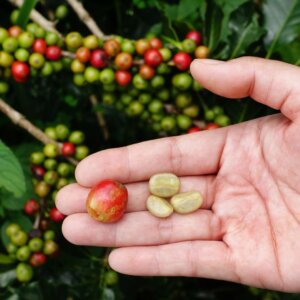
Green coffee beans are the seeds of the coffee cherry
Although arabica coffee plants will self-pollinate, when bees provide cross-pollination, it makes a big difference for the plants! Wasps, some flies, and even small birds help to pollinate as well, but it appears that some coffee varieties rely almost entirely on honeybees for pollination.

A coffee farm in Brazil
When bees help to pollinate coffee, recent studies have shown it leads to bigger coffee beans AND larger yields! We, here at Carrabassett Coffee Company, wonder if bee-pollinated coffee has stronger or more complex flavors, but we haven’t found any studies making that connection (yet!).
Shop our Single Origin Coffees to discover coffees from countries all over the (coffee-growing) world! Learn about how country of origin makes a difference in coffee flavor by clicking the images below:



And be sure to say thanks to the bees, the next time you brew a cup of our really good coffee.